
By Grant Shannon, founder of Dogs Connect and designer of The Enricher
The short answer: for most dogs left home on a workday, the only real stimulation happens in the first hour — the morning walk and whatever chew or puzzle you leave behind. Once that's finished, the next seven or eight hours are mostly spent waiting, dozing, or inventing their own entertainment. The answer usually isn't more enrichment at 8am. It's spreading engagement across the whole day.
A workday, from your dog's side
Picture a fairly typical Australian weekday:
- 7.00am — Walk around the block.
- 8.15am — You grab your keys. A filled chew toy goes down as you leave.
- 8.30am — The chew toy is empty.
- 8.30am to 5.30pm — Nothing new happens.
- 5.45pm — You walk in, and get the greeting of a dog who's been saving up all day.
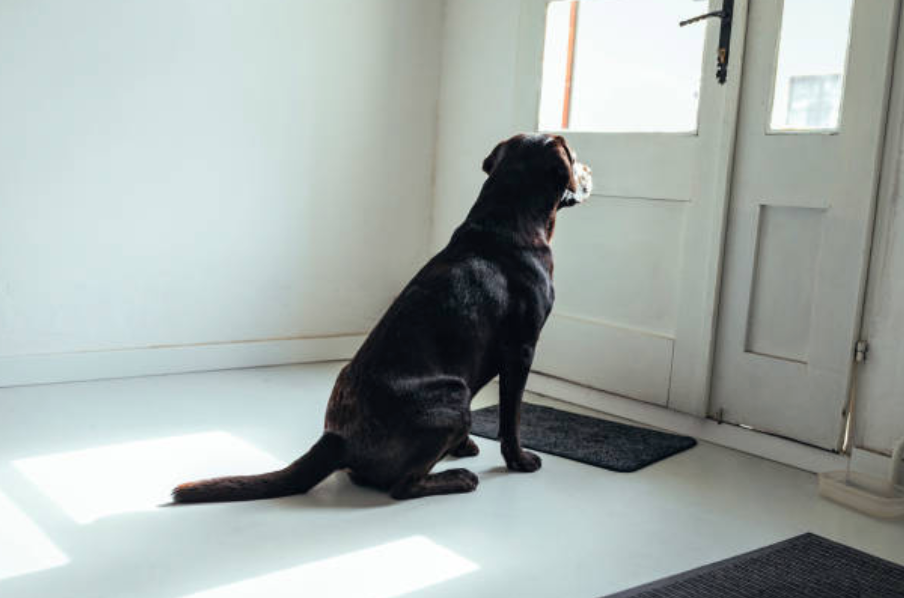
We experience that as one working day. Your dog experiences it as a long stretch where the most interesting thing that can happen is you coming home. Dogs live moment to moment. Eight hours with nothing to notice, investigate or anticipate is a lot of moments.
"But they just sleep all day, don't they?"
Partly, yes. Dogs rest a lot, and rest is healthy. But there's a real difference between the settled sleep that follows a satisfying activity and the light, alert dozing of a dog who is waiting. The first is recovery. The second is a dog with nothing better to do.
The dogs I work with through Dogs Connect — in schools, homes and community settings across Australia — are calmer and more settled when their day has a rhythm to it: something to do, then rest, then something new.
Signs your dog is bored while you're out
Bored dogs rarely sit quietly about it. They find their own jobs, and those jobs are usually ones you didn't assign:
- Barking at every passer-by, bird or delivery
- Digging, especially along fence lines
- Chewing things that aren't theirs — cushions, door frames, the garden hose
- Escaping the yard to find stimulation elsewhere
- Restlessness and pacing in the evening
- A greeting at the door so intense you can barely get inside
There's no such thing as a naughty dog. These are dogs filling an empty day as best they can.
One important line to draw: if your dog shows real distress when alone — constant howling, injuring themselves trying to get out, toileting only when you leave — that may be more than boredom. Speak with your vet or a qualified behaviour professional.
It isn't that you don't care
Almost every owner I meet already knows their dog needs more than a walk. The lack of day-long enrichment isn't because people don't care. They care deeply. It's logistics. You can't run a scent game at 11am and a puzzle at 2pm from your desk.
So the question changes. Not "how do I entertain my dog?" but "how do I structure my dog's day when I'm not there?"
Six ways to give your dog a better workday
- Make the morning walk a sniff walk. Ten minutes of letting your dog sniff and choose the route does more for their brain than thirty minutes of marching. Sniffing is how dogs read the world.
- Swap one big hit for several small ones. One chew at 8.15am is over by 8.30am. Four smaller experiences spread across the day give your dog something to anticipate again and again.
- Vary the type of enrichment. Rotate between foraging (scatter feeding, snuffle mats), chewing, problem-solving (puzzle toys) and exploring (a new object to investigate). Variety holds interest far longer than repetition.
- Make leaving the start of something good. If good things begin when you walk out the door, your departure stops being the worst moment of the day.
- Break up the middle of the day. A dog walker, a neighbour, a day or two of daycare a week, or scheduled enrichment that releases while you're out.
- Keep evenings for connection. Training games, play and calm time together. A dog who has had a full day doesn't need you to be their only source of everything.
Where The Enricher fits
Point 5 is the one most owners can't solve by themselves, and it's why we built The Enricher. It mounts on a wall or post and holds four enrichment items — chews, toys or puzzle feeders you choose. Each compartment releases on a timer you set with a simple dial, anywhere from 60 seconds to 8 hours apart. No app, no Wi-Fi, no subscription.
The result is four new moments spread through your dog's day, instead of one at 8.15am. You can read more about why the timing matters in What Is Scheduled Enrichment?, or see the setup on our How to Use page.
Your dog's day shouldn't stop when you leave the house.
Frequently asked questions
How long can a dog be left home alone? It depends on age, health and toilet access. Puppies, senior dogs and dogs with medical needs need much shorter stretches. For adult dogs left for a full workday, many vets and trainers recommend planning a midday break, whether that's a walker, a neighbour or daycare.
Is it unkind to leave my dog home while I work? No. Most dogs live happily with working owners. What matters is how the day is structured: exercise and connection before and after, plus things to do while you're out.
Does leaving the TV or radio on help? Background sound can mask outside noise and help some dogs settle. It doesn't give your dog anything to do, so it works best alongside real enrichment rather than instead of it.
Will getting a second dog fix boredom? Sometimes, but not always. Two bored dogs can simply be bored together, or bored and in trouble together. Sort out daily structure first.
Is The Enricher a treatment for separation anxiety? No. It's an enrichment tool that supports routine and independent activity. If your dog is significantly distressed when alone, seek help from your vet or a qualified behaviour professional.
Grant Shannon is the founder of Dogs Connect and the designer of The Enricher. He is IAABC ACD certified and has spent more than 15 years working in dog behaviour, wellbeing and education, including placing wellbeing dogs in more than 400 schools and community settings across Australia.
Share:
Avoiding Anxiety in Dogs: Building Confidence Through Relationship and Enrichment
What Is Scheduled Enrichment? Why the Timing of Your Dog's Enrichment Matters